
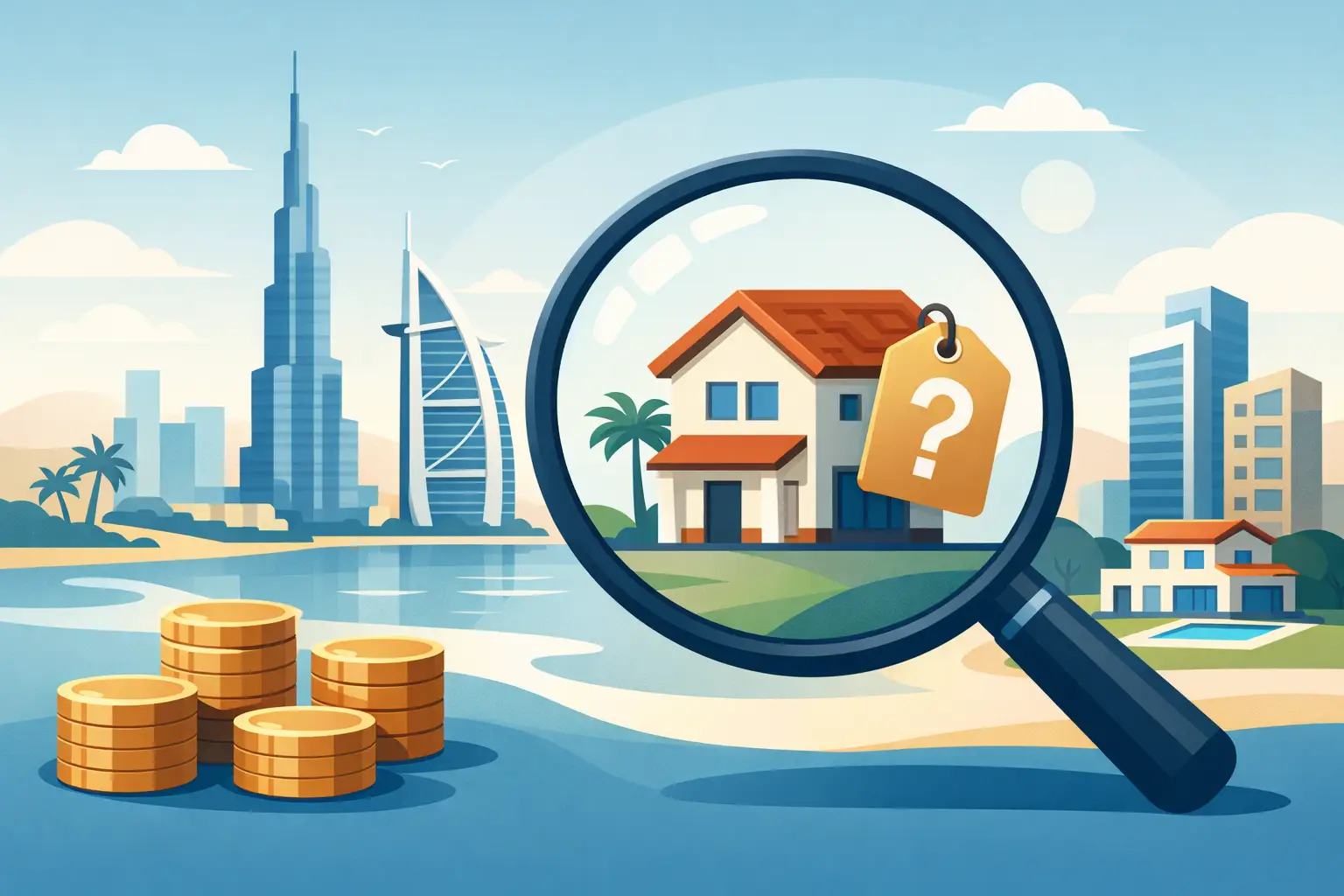
Is Property Cheap in Dubai? A Real Answer
A studio in Dubai can cost less than a one-bedroom in many global gateway cities, while a villa on Palm Jumeirah can sit firmly in the luxury bracket. That is why the question, is property cheap in Dubai, does not have a one-word answer. Dubai offers real value in some communities, premium pricing in others, and a wide spread in between.
For buyers and investors, the better question is not whether Dubai is cheap in absolute terms. It is whether Dubai offers the right price for the location, product type, rental demand, and long-term upside you want. If you look at it that way, Dubai becomes easier to compare and much easier to buy into with confidence.
Is property cheap in Dubai compared to other cities?
Compared with cities such as London, New York, Singapore, or Hong Kong, Dubai often looks competitively priced on a price-per-square-foot basis, especially in newer residential stock. Buyers can still find modern apartments in master-planned communities at entry points that feel accessible relative to other international markets.
That said, cheap is not the same as affordable for everyone. A first-time buyer with a limited down payment may still find Dubai expensive, particularly after adding closing costs, registration fees, and furnishing. On the other hand, an investor comparing global cities may see Dubai as attractively priced because the product is newer, the buildings offer better amenities, and rental yields can be stronger.
This is one of Dubai’s biggest advantages. In many mature markets, high prices often come with aging stock, lower rental returns, or slow transaction processes. Dubai tends to offer a cleaner, faster, and more transparent buying experience, which adds to the value equation.
Why Dubai can feel cheap or expensive
The Dubai market is wide. A buyer searching in Jumeirah Village Circle, Dubai Sports City, Al Furjan, or parts of Dubailand will see very different price points from someone focused on Downtown, Dubai Marina, Palm Jumeirah, or beachfront inventory on Dubai Islands.
Property type matters just as much as location. Studios and one-bedroom apartments usually provide the lowest barrier to entry. Townhouses move into a different budget range, and villas can jump quickly depending on community, plot size, and developer. A ready property may offer immediate use or rental income, while off-plan inventory can create a more flexible payment path but a longer wait.
Amenities also shape pricing. Buildings with branded interiors, beach access, golf views, concierge services, or stronger developer reputations will rarely qualify as cheap, even when they still look good compared with other international markets. Buyers are not just paying for square footage. They are paying for convenience, status, infrastructure, and expected demand.
Where property feels more affordable
If your goal is finding value rather than a trophy address, Dubai still has neighborhoods where pricing is relatively approachable.
Jumeirah Village Circle and similar value-led areas
Jumeirah Village Circle remains one of the best-known examples of a community where buyers often start their search. It has broad apartment inventory, a mix of ready and newer developments, and recurring investor interest because of rental demand from professionals and small families. Prices can be far more approachable here than in central waterfront districts.
Dubai Sports City also attracts value-focused buyers who want lower entry prices without moving too far from established demand corridors. The same applies to selected pockets of Dubailand and Al Furjan, where newer housing stock and community development have made them practical options for both end users and investors.
Affordable in Dubai usually means relative affordability. It rarely means bargain-basement pricing in the way some buyers imagine. A low entry point still needs to be judged against service charges, handover quality, future supply, and the actual rental market in that area.
Off-plan can lower the entry barrier
For many buyers, off-plan is the closest thing to making Dubai property feel cheaper. The headline price may or may not be lower than a comparable ready unit, but the payment structure often makes the purchase more manageable. Staged payments spread the cost over time and can allow buyers to secure a property in a growth corridor before the surrounding area fully matures.
There is a trade-off. Off-plan buyers need patience, confidence in the developer, and a realistic timeline. If you want immediate occupancy or income, ready property may still make more sense, even if the upfront cost feels heavier.
Where Dubai is clearly not cheap
Dubai is not uniformly affordable, and premium communities prove that quickly. Palm Jumeirah, prime Business Bay towers, beachfront addresses, and branded residences are priced as high-demand, high-status assets. In these locations, buyers are paying for scarcity, visibility, and top-tier lifestyle appeal.
For end users, that can still be worth it if the home fits a long-term personal plan. For investors, the math needs closer attention. High purchase prices do not always translate into the best rental yields. A prestigious address may preserve value well and attract strong tenant profiles, but yield compression is common in the most expensive areas.
This is where many buyers get tripped up. They assume the most famous areas are the best investments by default. Sometimes they are. Sometimes a mid-market apartment in a well-rented community outperforms a luxury unit on income return.
What buyers should compare instead of asking only if it is cheap
Price matters, but value decides whether a purchase works.
Price per square foot
This is still one of the fastest ways to compare one community with another. It helps separate emotional appeal from actual pricing. A unit that looks affordable in total price may be small for its category, while a slightly more expensive unit may offer much better space efficiency.
Rental yield and vacancy risk
Investors should focus on likely income after realistic rent assumptions, not just optimistic marketing figures. A lower-priced apartment in a neighborhood with reliable occupancy can be more attractive than a premium unit with longer vacancy periods.
Service charges and ownership costs
A building with heavy annual charges can change the economics of a deal quickly. That is especially true for investors looking at net returns. Cheap entry pricing can lose its appeal if the ongoing costs are high.
Developer quality and handover track record
Not all value is visible on day one. Build quality, maintenance standards, and community execution affect both resale and rental performance. Buyers who focus only on low launch prices may end up paying later in weaker demand or higher upkeep.
Is property cheap in Dubai for investors?
For many investors, yes, Dubai can still be attractively priced. That is particularly true when compared with major international cities offering lower yields, older stock, and more complex ownership structures. Dubai combines freehold zones, broad buyer access, strong infrastructure, and a market that remains active across multiple budget levels.
But investor-friendly does not mean every deal is cheap or smart. Timing matters. Supply matters. Community selection matters. A one-bedroom in a high-demand, livable district can be a stronger buy than a larger unit in a location with weaker rental pull.
The strongest investor approach is to match budget to a clear strategy. If your goal is rental income, focus on communities with proven leasing demand. If your goal is appreciation, look at areas benefiting from infrastructure, lifestyle upgrades, and sustained buyer attention. If your goal is a second home with future upside, then use quality of life and resale appeal as part of the calculation.
Is property cheap in Dubai for end users?
For end users, Dubai can be a compelling market because it offers genuine choice. Buyers can enter through apartments, scale into townhouses, or target villas in newer family communities. Compared with some global cities, the lifestyle package is often stronger for the price – newer buildings, amenities, parking, security, and modern layouts are far more common.
Still, affordability depends on your income, financing position, and time horizon. If you plan to stay for several years, ownership may make sense even if the purchase does not feel cheap at first. If your plans are uncertain, renting may remain the better short-term move.
The practical answer is this: Dubai property is not universally cheap, but it can be competitively priced and very good value. Buyers who focus only on headline price usually miss the bigger opportunity. The smarter move is to compare community, quality, yield, and future demand, then act in the segment that matches your budget and purpose. If you are serious about buying, clarity on those four points will take you further than chasing the lowest number on the page.