
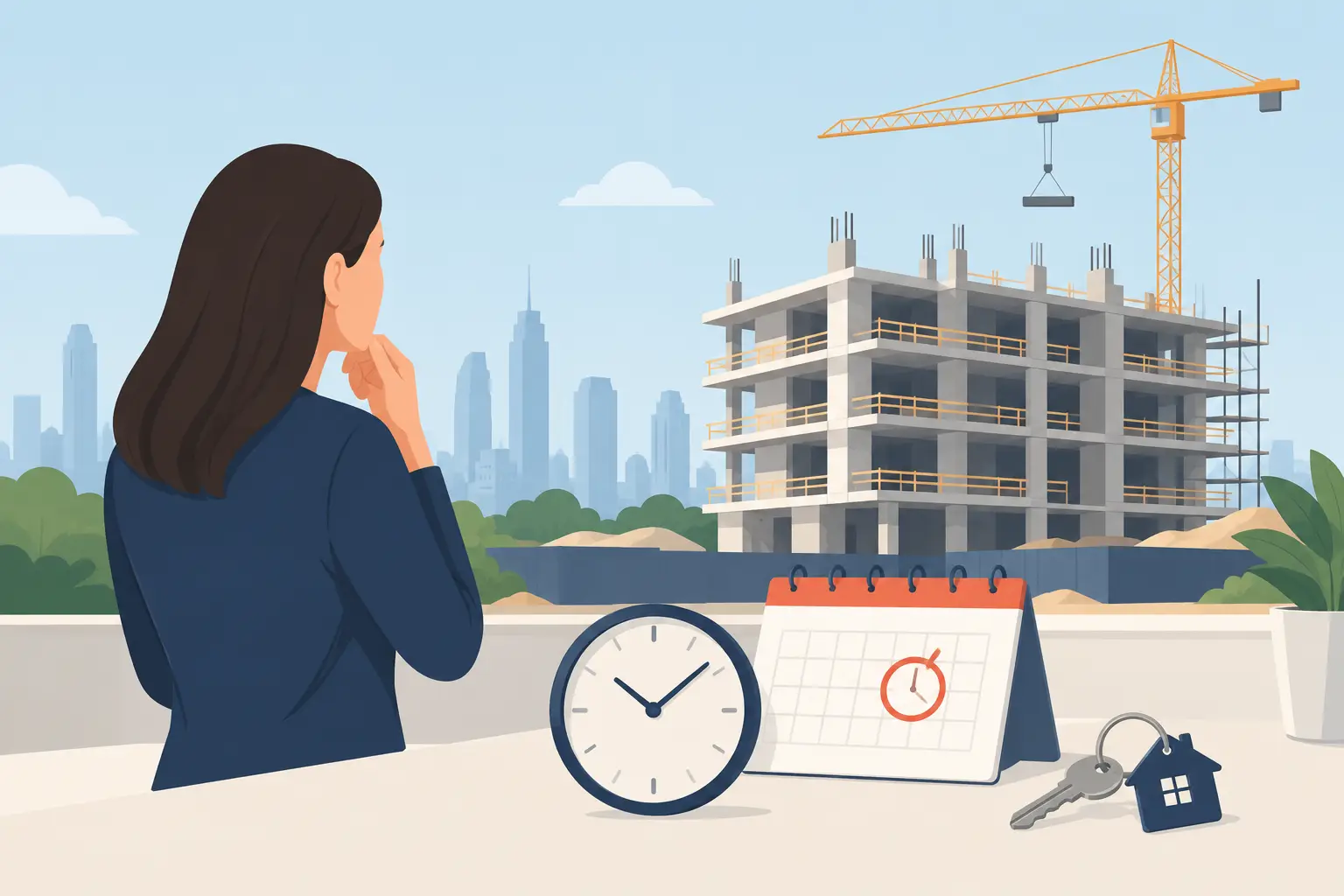
Offplan Handover Delays and What Buyers Can Do
A handover date can shape almost every decision around an off-plan purchase: when you sell your current home, start collecting rent, arrange finance, or relocate to Dubai. That is why offplan handover delays deserve more attention than a projected completion date on a brochure. A delayed project is not automatically a bad investment, but buyers need to understand the cause, the contractual position, and the practical effect on their plans before reacting.
For UAE buyers and investors, the right response is usually calm, documented, and specific to the development. The key question is not simply, “Has the handover moved?” It is whether the revised schedule still supports your goals and whether the developer is communicating clearly about the path to completion.
Why offplan handover delays happen
Construction programs are built around a sequence of approvals, contractor work, material supply, utility connections, inspections, and final completion procedures. A setback at one stage can affect the next. In a large master-planned community, the building itself may be close to completion while road access, landscaping, district infrastructure, or authority clearances are still being finalized.
Common causes include changes to design or specifications, contractor performance issues, labor or material constraints, delayed authority approvals, and unexpected site conditions. Market conditions can also affect construction momentum, particularly when costs change sharply or a contractor is replaced. In some cases, a developer may choose to revise aspects of the project to improve the final product, but buyers should not assume that every delay is positive or unavoidable.
There is also a meaningful difference between a short extension and a project that repeatedly moves through new dates. A handover adjustment of a few months may be manageable for an investor with a long-term holding strategy. Repeated revisions without detailed progress updates call for closer review.
The advertised date is not always the contractual date
Marketing materials often refer to an expected completion period, such as Q4 of a given year. Your sale and purchase agreement, commonly called an SPA, should be the document that matters most. It may state a scheduled completion date, provide a grace period, explain force majeure events, and outline remedies if the developer does not deliver as agreed.
Read the wording carefully. A projected date and a contractually committed date are not necessarily the same. The agreement may also define what “completion” means. It could refer to a construction milestone, a completion certificate, a notice to take handover, or the point when the unit is ready for possession. Those distinctions can matter when you are coordinating a mortgage, a lease end date, or a tenant placement.
Start with facts, not assumptions
When a handover date changes, ask for a written update that identifies the revised expected handover date and the reason for the change. General reassurance is useful only up to a point. Buyers should seek practical information about construction progress, current milestones, and the outstanding steps before handover.
Review your SPA, payment plan, receipts, developer notices, and any written communication about the original timeline. Keep these records in one place. If you purchased through a broker, request help interpreting the timeline and gathering the right questions for the developer. Emporium Properties can help buyers maintain a clearer view of the purchase process while keeping communication focused on the specific property and next action.
It is sensible to compare the developer’s update with visible project progress where possible. Site visits, recent construction images, official project updates, and conversations with the sales team can all add context. They do not replace the contract, but they can help you assess whether the new target date appears realistic.
Check what your SPA says about a delayed handover
Your first priority is to understand your rights and obligations under the agreement. Focus on the scheduled completion clause, permitted extension period, delay notifications, cancellation provisions, compensation language, and force majeure definitions. Do not rely on an oral explanation when the written contract states something different.
Some agreements include a grace period during which the developer may deliver later than the initial date without triggering a buyer remedy. Others may set out circumstances in which delays are treated differently. The details vary by project and developer, so there is no universal answer to whether compensation or cancellation is available.
If the financial impact is significant, obtain independent legal advice from a qualified UAE property lawyer. This is especially relevant if you are considering withholding a payment, terminating an agreement, making a formal claim, or selling your contractual interest. A rushed decision can create more risk than the delay itself.
Do not stop payments without advice
A delayed handover can feel frustrating, particularly when you are paying rent elsewhere or have capital tied up in the purchase. Still, stopping scheduled payments on your own can put you in breach of the SPA. Payment obligations, delay claims, and handover remedies are often connected but are not always resolved in the way buyers expect.
Before changing your payment behavior, confirm the status of the project, review the contract, and seek professional guidance. If a payment is due, ask the developer or your advisor what documentation is available and what options may exist under the agreement. Keep every request and reply in writing.
Rework your personal or investment plan
The financial impact of a delay depends on why you bought. An end user may need to extend a current lease, reconsider a move date, or arrange temporary housing. An investor may lose expected rental income, face a different interest-rate environment, or need to revise the timing of a resale strategy.
For a cash buyer, the central question may be opportunity cost: could the capital have been deployed elsewhere during the extended period? For a financed buyer, speak with your lender early. Mortgage approvals, valuations, income documents, and interest-rate offers may have validity periods. A delay that seemed minor at reservation can become more material if financing needs to be renewed.
It also helps to revisit the investment case rather than focusing only on the missed date. Has the location improved? Are nearby infrastructure, retail, schools, beaches, or transport links progressing? What are current prices for comparable ready and off-plan homes? A delay may weaken your original cash-flow assumptions while the underlying community remains attractive. The reverse can also be true.
How to judge whether a revised date is credible
A revised handover date should come with evidence of progress. Buyers should look beyond a single new month or quarter and consider whether the project is visibly moving toward completion. Finishing work, common areas, parking, building services, external works, and authority inspections can take time even after the structure is complete.
Ask direct questions: What construction stage has been reached? Has the contractor changed? Are utilities and access works underway? When are inspections expected? Is the developer issuing a notice of anticipated completion or a formal handover schedule? Clear answers do not guarantee delivery on time, but vague or inconsistent answers should encourage further due diligence.
Developer track record is relevant as well. A history of delivering comparable projects, maintaining communication, and completing communities to the promised standard can provide reassurance. However, every development has its own timeline, funding structure, contractor, and approval process. Past performance is a useful signal, not a guarantee.
Keep communication organized and professional
Emotion is understandable when a move or return on investment is delayed. The most effective buyer communication is still concise and evidence-based. State the unit number, reference the relevant SPA clause if appropriate, ask for the specific information you need, and request a written response by a reasonable date.
Avoid making decisions based on social media discussions or unofficial rumors from other buyers. They may highlight legitimate concerns, but they do not establish your contractual position. Your circumstances, payment status, and contract terms may differ from those of another purchaser in the same building.
If you are buying in Dubai or Ras Al Khaimah from abroad, appointing a trusted local point of contact can make follow-up easier. That person should provide clear updates, not simply pass along optimistic statements. You need a practical view of progress, paperwork, and the actions required before keys are released.
Make the next decision based on your timeline
Offplan handover delays are best handled as a decision point, not just a disappointment. If the revised completion date still works for your budget, residency plans, and investment horizon, staying the course may be the right choice. If it creates a serious cash-flow or relocation problem, review the contract and obtain advice before taking any formal step.
A well-chosen off-plan home can still deliver on location, quality, and long-term value after a revised handover. Keep your records current, ask for facts, and make your next move only after you understand the timeline that applies to your unit.